
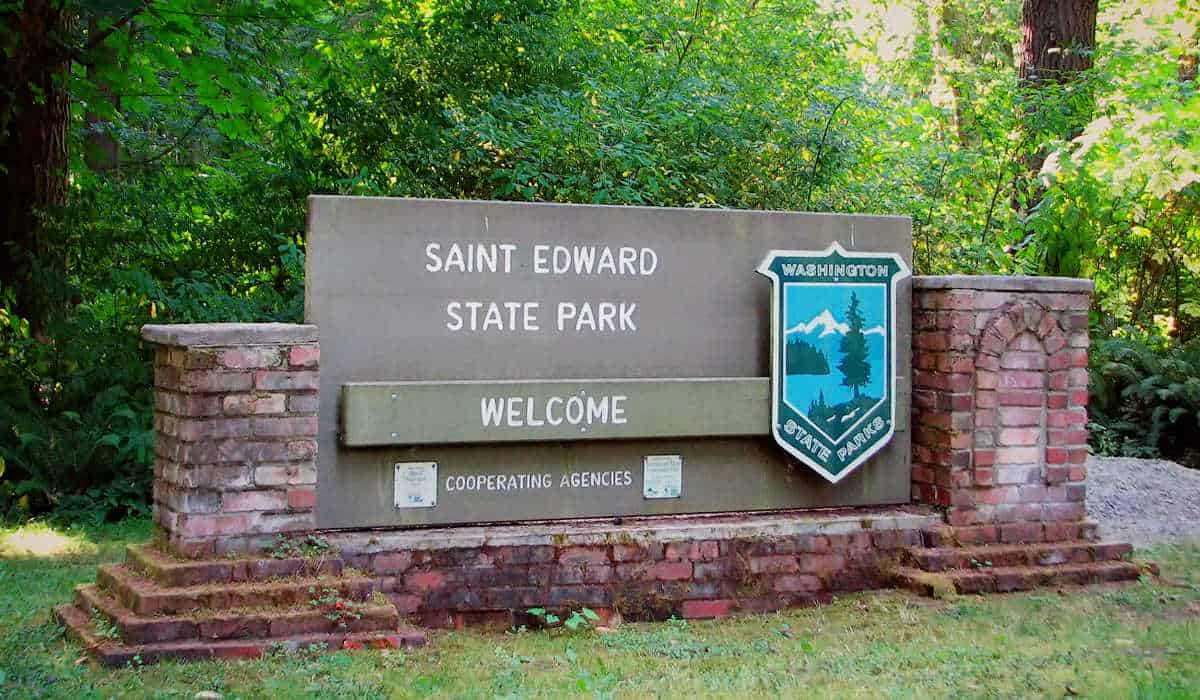
Saint Edward State Park doesn’t feel like a city park, even though it’s right in the middle of one. Tucked along the northeast edge of Lake Washington in Kenmore, just north of Kirkland, it’s a sprawling forest with mossy trails, lake views, grassy lawns, and a towering old building that looks like something out of another century — because it is.
What was once a Catholic seminary is now the centerpiece of this 326-acre park. The massive Romanesque building still stands tall above the trees, its red roof visible from a distance. But what brings most people here isn’t the architecture — it’s the forest. And the feeling. This is the kind of place where you go to get out of your own head for a while.
Saint Edward is peaceful in a way that surprises people. It’s not far from city traffic or suburban neighborhoods, but inside the park, you’re surrounded by quiet trails, enormous fir trees, and birdsong echoing through the canopy. There’s no lakefront boardwalk or flashy attractions — just a lot of green, a few hidden views, and the sense that you’ve left the noise behind.
A Walk Through Time (and the Woods)

The land here has seen more than one chapter. It was logged in the 1800s, then handed over to the Catholic Archdiocese in the 1920s to build a seminary — Saint Edward — which operated for decades before closing in the 1970s. The building sat mostly unused for years while the state took over the land and slowly shaped it into a public park. Today, the restored seminary has been reborn as The Lodge at St. Edward, a boutique hotel and restaurant, but the rest of the grounds remain open to the public — as they should be.
The park spreads out from the lodge like a green fan, with trails winding down the hill toward Lake Washington. You’ll find picnic tables, sports courts, an enormous wooden playground (one of the best around, especially for kids under 10), and wide open lawns perfect for throwing a frisbee or just stretching out in the grass.

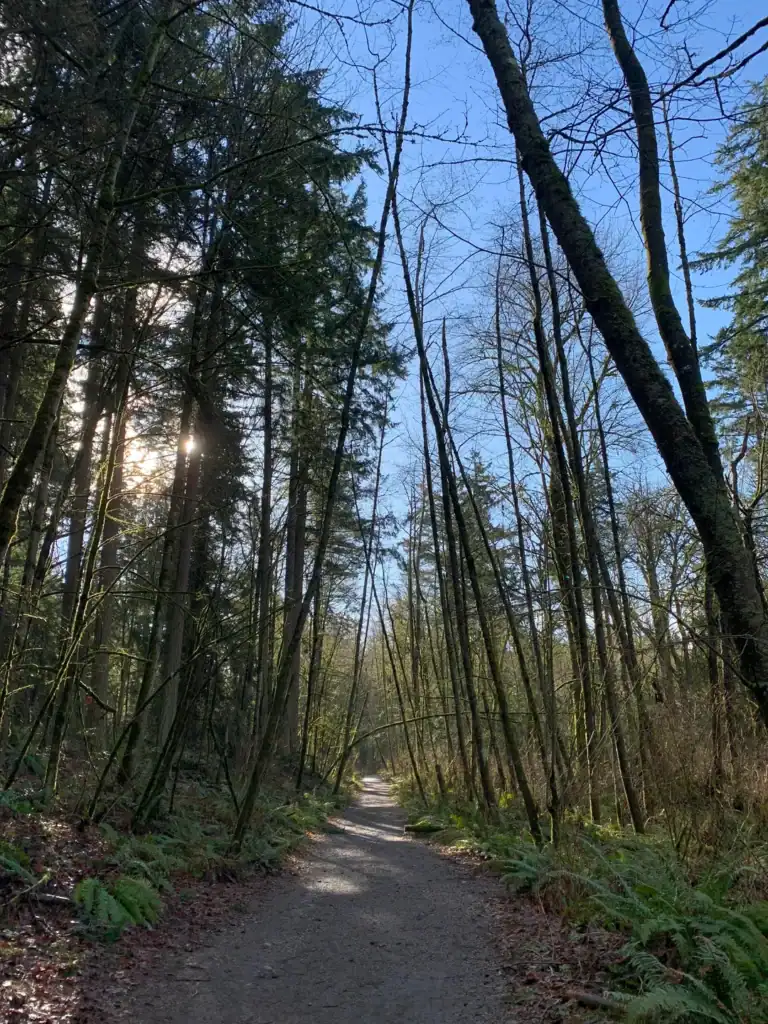
But the real draw is the trail system — dozens of intersecting paths, many unpaved, that lead you deep into second-growth forest. It’s not high alpine hiking, but it’s shady, immersive, and full of subtle beauty. Many trails slope gradually downhill toward the water, where you’ll find little beach clearings just big enough for a quiet sit or a skimmed stone or two.
What You’ll See and Hear (If You Slow Down)
This isn’t a place for views in the traditional sense. You won’t get a sweeping panorama of the Olympics or Mount Rainier from the top. But you will walk through cathedral-like stands of Douglas fir and western red cedar, see flickers of sunlight bouncing off the lake through the trees, and maybe even cross paths with a deer if you’re early enough.
Birders love Saint Edward — especially during migration seasons — and it’s not unusual to spot herons, owls, woodpeckers, and warblers all in the same morning. If you walk quietly, you’ll hear more than you see: the rustle of squirrels in the underbrush, the knock of a beak on bark, the occasional splash of a fish near shore.
In spring, wildflowers dot the trailsides. In fall, the entire place glows yellow and gold. Even in winter, when most parks feel empty and gray, Saint Edward feels alive.
For Families, First-Timers, and Picnickers
You don’t have to hike miles to enjoy the park. The upper lawns near the lodge are flat, sunny, and full of space to picnic or let the kids run wild. The playground alone is worth the trip — a huge wooden structure with towers, bridges, and climbing walls that’s busy almost every weekend. There’s even a separate little-kid section for toddlers, which isn’t always a given in parks this size.
There are also paved paths for strollers, benches tucked into quiet corners, and spots to grill or spread out a blanket. The lodge has a restaurant and bar if you want something more upscale than a packed lunch — and the public restrooms nearby are well maintained.
Just make sure you have a Discover Pass (or grab a day pass at the kiosk), or you’ll come back to a ticket on your dash.
Events, Happenings, and Little Extras
Unlike a lot of state parks, Saint Edward also has a small but steady calendar of community events. You’ll occasionally find concerts, nature walks, or pop-up markets happening near the lodge or in the open lawn. Rangers sometimes lead interpretive hikes or ecology talks, and the hotel hosts everything from seasonal festivals to wine tastings.
For families, there’s the Agents of Discovery app — a location-based interactive game that turns your hike into a nature scavenger hunt. It’s one of those rare tech-in-nature things that actually works well, especially if your kids need a little nudge to explore the trails.
Getting There and Planning Ahead
The park entrance is off Juanita Drive in Kenmore. It’s well-signed, and the main lot is big — though on sunny weekends it fills up fast. If you’re planning to hike, wear shoes that can handle a bit of mud and elevation. Most trails are short-to-moderate loops, but they can get slick in the rainy months and steep enough to catch your breath.
Bring water. Bring snacks. And bring patience for uphill on the way back from the lake — it’s not a killer climb, but it’s steady.
There are no campsites here. It’s day-use only. And if you’re planning to launch a kayak or paddleboard, you’ll have to carry it down by hand — there’s no formal launch or dock.
Final Thoughts
Saint Edward State Park doesn’t scream for attention. It’s not dramatic. It’s not extreme. But it has a quiet presence that sneaks up on you. One minute you’re walking through a city-adjacent lawn, and the next you’re alone in the trees, with just the sound of your steps and the distant call of a bird you can’t quite name.
It’s a park that doesn’t need to prove anything — and because of that, it ends up offering a little bit of everything. History. Forest. Water. Wildlife. And space to let your shoulders drop a little.
Bring a friend, bring your kids, or just bring a thermos of coffee and sit by the lake. However you do it, this is one of the rare places where the city slips away — without actually going that far.
The 5 Best Historic Hotels In Washington State (My Opinion)

Is The Boeing Future Of Flight Tour Worth It? Our Experience
Top 5 Mysterious Natural Wonders In Washington & Oregon
The 5 Best Spa Resorts In Washington State (A Man’s Opinion)
5 Best Things To Do In Ocean Shores, WA (There Are Only 5…)
